
The Art of Making a Hurley: Crafting the Heart of Gaelic Games
In the world of Gaelic games, the hurley is much more than just a piece of sports equipment – it’s a symbol of heritage, skill, and tradition. For hurlers across Ireland and beyond, their hurley is an extension of themselves, a carefully crafted tool that plays a crucial role in the fast-paced, exhilarating game of hurling. But how is a hurley made, and what goes into crafting this iconic piece of Irish culture? In this blog, we delve into the art of making a hurley, exploring the craftsmanship involved and celebrating the makers who keep this age-old tradition alive.
 The History and Significance of the Hurley
Before we explore how hurleys are made, it’s essential to understand their significance. The game of hurling is one of the oldest field sports in the world, with roots stretching back over 3,000 years. The hurley, known as a *camán* in Irish, is central to the game, and its design has remained remarkably consistent over the centuries. Traditionally made from ash wood, the hurley is crafted to be both strong and flexible, allowing players to strike the ball with power and precision.
The Craftsmanship Behind a Hurley
The process of making a hurley is a fine art, passed down through generations of skilled craftsmen. While modern technology has introduced new tools and methods, the essence of hurley-making remains deeply rooted in tradition. Here’s a step-by-step look at how a hurley is made:
- Selecting the Wood
The journey of a hurley begins with the selection of the right wood. Ash trees have long been the wood of choice for hurley makers, due to their strength, flexibility, and light weight. The best hurleys are made from the root section of the ash tree, where the grain is tight and strong, providing the perfect balance between durability and performance.
Hurley makers, also known as *camán makers* or *hurley makers*, carefully inspect each tree to ensure it meets the high standards required for crafting a hurley. The wood must be free from knots and defects, as any weakness in the grain could lead to the hurley breaking during play.
 Cutting and Shaping
Once the wood is selected, the next step is cutting it into the rough shape of a hurley. This process, known as *felling*, involves cutting the ash into planks and then into *blanks* – rectangular pieces of wood that will be shaped into the final product.
The *blank* is then shaped into a rough outline of a hurley using a bandsaw. This initial shaping defines the basic form, including the handle (*bas*) and the head (*boss*) – the broad, flat end used to strike the ball. This part of the process requires precision, as the balance and feel of the hurley are crucial to its performance on the field.
- Carving and Sanding
After the rough shape is established, the hurley is hand-carved and sanded to refine its contours. This stage is where the hurley truly begins to take on its final form. The handle is carefully shaped to fit comfortably in the player’s hand, while the head is crafted to provide the optimal striking surface.
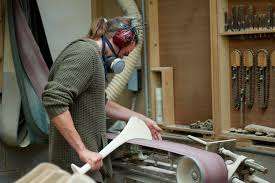 The sanding process is particularly important, as it ensures a smooth finish that is comfortable to grip and easy to manoeuvre during play. The craftsman’s eye and experience play a significant role in this stage, as the balance and weight distribution of the hurley are fine-tuned.
- Finishing Touches
Once the hurley is shaped and sanded, it undergoes a series of finishing touches. This includes applying a coat of varnish or oil to protect the wood and enhance its appearance. Some players prefer a grip to be added to the handle, which can be done using tape or other materials, providing extra control during play.
Customisation is also a common request. Many hurley makers offer the option to engrave names, initials, or team logos on the hurley, making each piece truly unique to its owner.
- Testing and Final Approval
Before a hurley leaves the workshop, it undergoes a final inspection to ensure it meets the high standards expected of a playing instrument. Some hurley makers will test the hurley’s balance and flexibility, ensuring that it performs well under the demands of the game. Once approved, the hurley is ready to be handed over to its new owner, ready to take its place on the hurling field.
 Celebrating the Hurley Makers
Hurley making is an artisanal craft, and Ireland is home to many skilled makers who continue this proud tradition. These craftsmen are often from families that have been making hurleys for generations, with knowledge passed down and refined over decades. Their work is highly respected in the world of hurling, and their hurleys are prized by players at all levels, from grassroots to the elite.
Some of the most renowned hurley makers in Ireland include:
– Star Hurleys (County Kilkenny): Based in the heartland of hurling, Star Hurleys has been crafting hurleys for generations. Their commitment to quality and tradition has earned them a stellar reputation, with their products used by some of the game’s biggest stars.
 – Brian Walsh Hurleys (County Wexford): Brian Walsh is another master craftsman whose hurleys are highly regarded. His attention to the specific needs of players, combined with his skill in working with ash, results in hurleys that are both durable and perfectly balanced.
– O’Connor Hurleys (County Cork): Renowned for producing custom-made hurleys tailored to individual player preferences, O’Connor Hurleys has a reputation for excellence and innovation, consistently delivering top-tier products.
Conclusion: The Heart of Gaelic Games
The craft of making a hurley is a blend of art, tradition, and skill, with each hurley telling a story of its creation. For the craftsmen who dedicate their lives to this work, it’s more than just a job – it’s a way of preserving a vital part of Irish heritage. And for the players who wield these hurleys, they are more than just tools of the game; they are a connection to the rich history and culture of hurling.
Next time you pick up a hurley, take a moment to appreciate the craftsmanship and tradition that has gone into making it. Whether you’re a seasoned player or a newcomer to the game, the hurley is a symbol of the passion, pride, and skill that define Gaelic games.